
Tick Risk is Increasing in Canada
- Expanding tick populations across southern Canada, endemic in Quebec, Ontario, and Manitoba
- Longer active season due to climate trends (early spring to late fall)
- Dogs at significant exposure risk in endemic regions
- Ticks transmit Lyme disease, Anaplasmosis, Babesiosis
Improper Removal Increases Risk
- Tweezers: risk of compressing tick
- Fingers: unsafe and inconsistent
- Basic hook removers: require technique, limited control
- Improper handling may increase exposure risk includes saliva secretion and regurgitation of infectious material
- Need: simple, controlled at-home removal solution
Controlled Tick Removal System
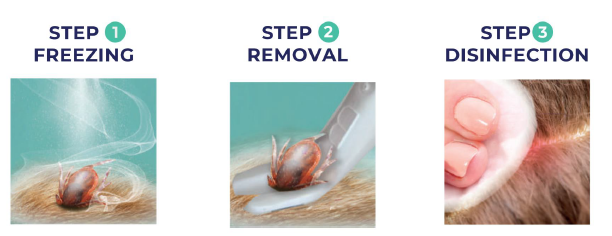
- Freeze helps immobilize the tick
- Dedicated tool enables controlled extraction
- APRT technology forms a protective layer
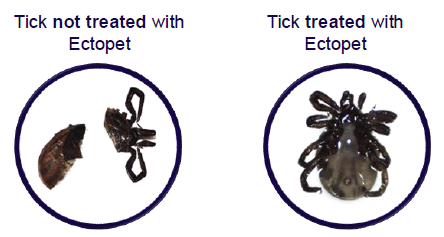
- Designed to help reduce the risk of tick rupture
- Suitable for dogs and cats
- Good for 40 ticks, 60 applications
Why Ectopet
- High pet ownership (~60% households)
- Strong seasonal demand (April to November)
- Trade-up from basic tools to health solution
- Supports safer at-home removal vs traditional methods, reducing infection risk
- Drives incremental sales in pharmacy and pet care
- Helps avoid costly vet visits
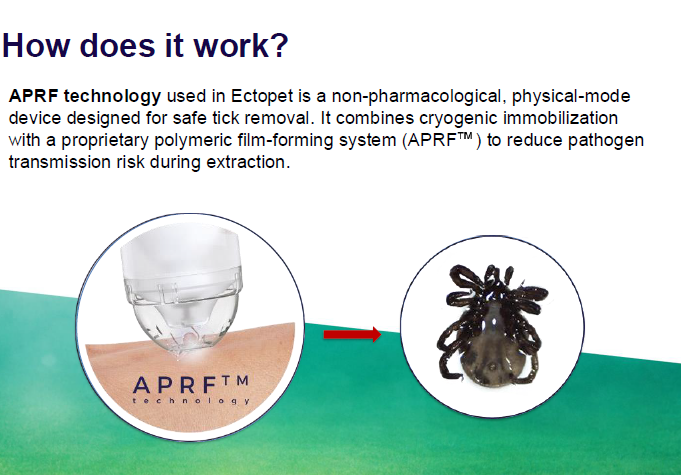
APRF Technology
When the spray is applied, the substance (e.g., isohexadecane + isopropyl myristate) spreads over the tick and surrounding skin, then quickly forms a thin, cohesive hydrophobic film.
- Coats and binds the tick body and mouthparts (gnathosoma)
- Creates a unified structure between the tick and the film
- Increases mechanical integrity during extraction
- Distributes pulling forces evenly rather than concentrating stress at the mouthparts
- Reduces risk of rupture or fragmentation
- Prevents release of internal fluids (gut contents, hemolymph)
- Limits micro-movement at the attachment site
- Complements the cryogenic effect by keeping the tick stabilized